
This guide walks you through the step-by-step process of how to create a Trading 212 Pie, covering everything from goal setting and stock screening to automated investing and portfolio rebalancing.
If you’re asking:
“How can I organise all my investments in one place without constantly micromanaging them?”
or
“Could there be a way to build a portfolio that automatically follows my strategy and adapts over time?”
Then you’re in the right place!
Key Takeaways
- Pies provide visual baskets that let you organise stocks and ETFs into a single portfolio based on percentage targets.
- They prioritise strategy over tactics, focusing on long-term allocation rather than timing short-term price movements.
- Auto-invest lets you automate deposits, distributing funds directly according to your slice allocations.
- External screeners, like Simply Wall Street, can help filter and select stocks before adding them to your pie.
- One-tap rebalancing lets you sell high-performing assets and buy underperformers to maintain your target allocation and risk profile.
Step #1: Get to Know Pies
Pies serve as convenient baskets where you can neatly organise and allocate your investments.
Each slice of this investment pie represents a unique asset, whether it be stocks, ETFs, or other financial instruments.
Pies are strategy-based rather than tactic-based. When you build a pie, you choose stocks based on allocations, for example, 10% of Stock A and 20% of Stock B.
As you invest, your money is allocated according to those target percentages, meaning the allocation template is the goal you’re working towards.
This contrasts with tactic-based strategies, where you might try to buy stocks when they appear undervalued or when they hit a specific price level.
Basically, you can think of a pie as a template or instructions for your future money, and it tells it where to go in percentage.
Step #2: Figure Out Your Goals
Before you start, think about why you’re investing. Are you saving for something specific, like a house or retirement?
Knowing your goal helps you pick the right investments for your pie.
For example, let’s say you’re going out on a road trip.
Before hitting the road, you’d likely already know your destination.
Similarly, when it comes to investing, defining your goals is like choosing your destination.
It gives your investment journey direction and purpose.
If you don’t have a goal, then you’re just driving around and seeing where you end up. It might work out, but it also makes it harder to know whether the decisions you’re making actually suit what you’re trying to achieve.
Pinpointing your investment goals helps you tailor your investment strategy to suit your needs.
Your investment approach will vary depending on whether you’re saving for short-term goals, like buying a house, or long-term objectives, like retirement.
Knowing your goals also helps you set realistic expectations.
If you’re saving for a down payment on a house you plan to buy in 5 years, you’ll likely opt for investments with lower risk and more liquidity, maybe even sticking to cash.
On the other hand, if retirement is your goal, you might be more inclined to tolerate short-term fluctuations in exchange for long-term growth potential.
Furthermore, having clear goals can help keep you motivated and disciplined.
Just as knowing you’re driving towards a breathtaking view can keep you focused during a long drive, having a clear vision of your financial goals can help you stay committed to your investment strategy, even during market downturns or tempting distractions.
Step #3: Explore Investments
Exploring investments on platforms like Trading 212 means checking out all the different ways you can put your money to work.
It’s like browsing through a store with shelves full of options, from familiar big-name products to more specialised items.
Each investment option, whether it’s buying shares of companies or investing in funds that track the overall market, comes with its own features and risks.
Taking your time to explore these choices lets you figure out what matches your goals.
For example, if you’re looking for steady growth, you might lean towards safer bets like well-established companies or diversified funds.
However, if you’re okay with more risk for the chance of higher returns, you might be interested in more volatile stocks or funds.
Step #4: Building Your Pie
Getting Started in the App
There are different options when building a pie; you can include up to 50 stocks in one pie.
First, log in to your Trading 212 app.
After that, you’ll be directed right to the Trading 212 homepage.
Then, tap the icon that looks like a pie, and there you’ll see your portfolio, including your investments.
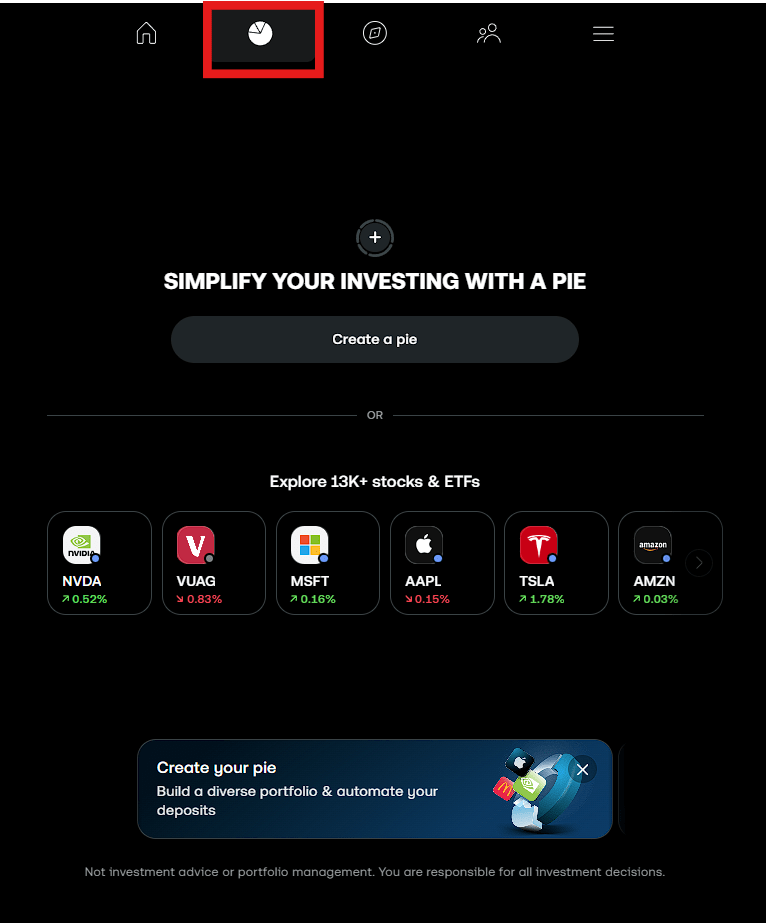
Go into the Pies tab and then tap Create Pie.
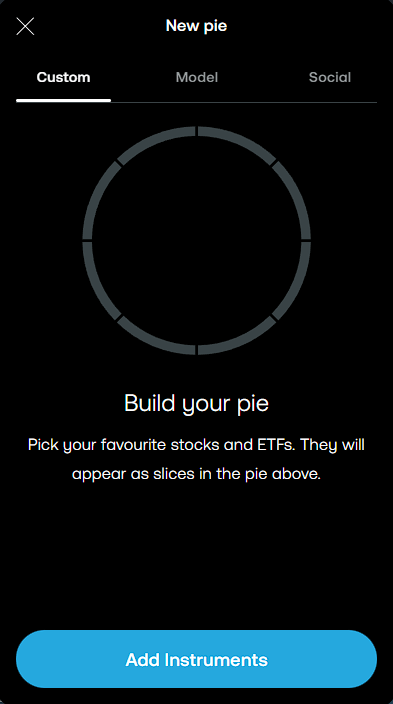
You’ll be asked if you want to choose a ready-made pie or build a custom pie. Select Custom Pie to build one from scratch.
Finding and Adding Stocks Using a Screener
You don’t just want to add random stocks; you want an actual reason to be adding them.
A screener can help identify stocks that meet specific criteria. For this guide, we will create a pie for high-yielding US stocks.
This is purely illustrative and not a recommendation.
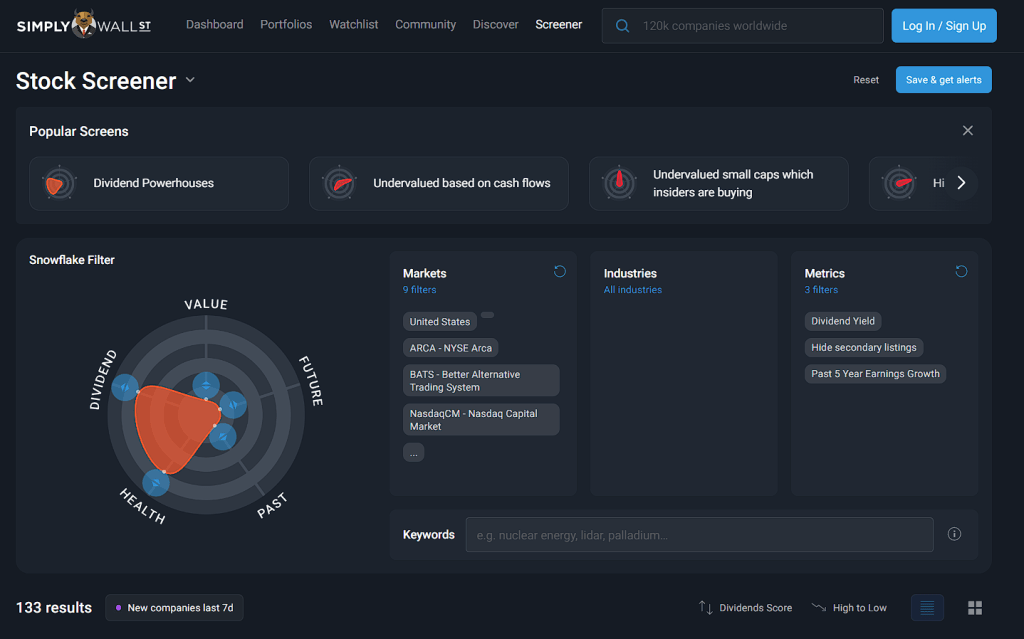
We’ll use Simply Wall Street Screener, which offers free or limited-access options.
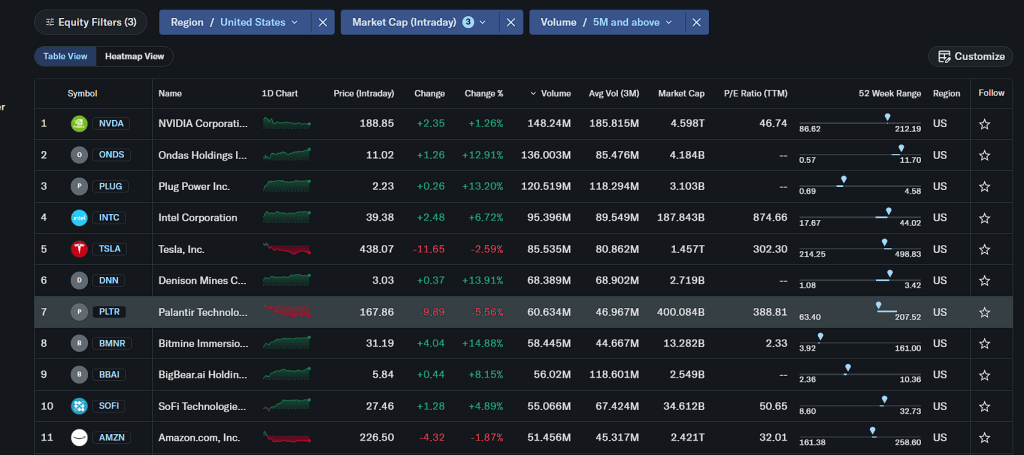
If access is unavailable, Yahoo Finance provides a similar free screener.
While you’re in Simply Wall Street Screener, you can filter out stocks based on market, industry, and other advanced filters.
Let’s edit the advanced filter and set at least three requirements for the stock we’re looking for to add to our pie.
- Market cap requirement: In this example, we look for companies that have a $100 million market cap or above.
- Past 5-year earnings growth, which can be 25% and above.
- Dividend yield from 7% to 10%, since we are looking for companies that give out high-yielding dividends.
The screener will provide a list of stocks that pass the criteria we set in our advanced filter search.
Adding Stocks to the Pie
Review the list generated by the screener to see if they are available in Trading 212.
After reviewing, for our example, five stocks from the screener were available.
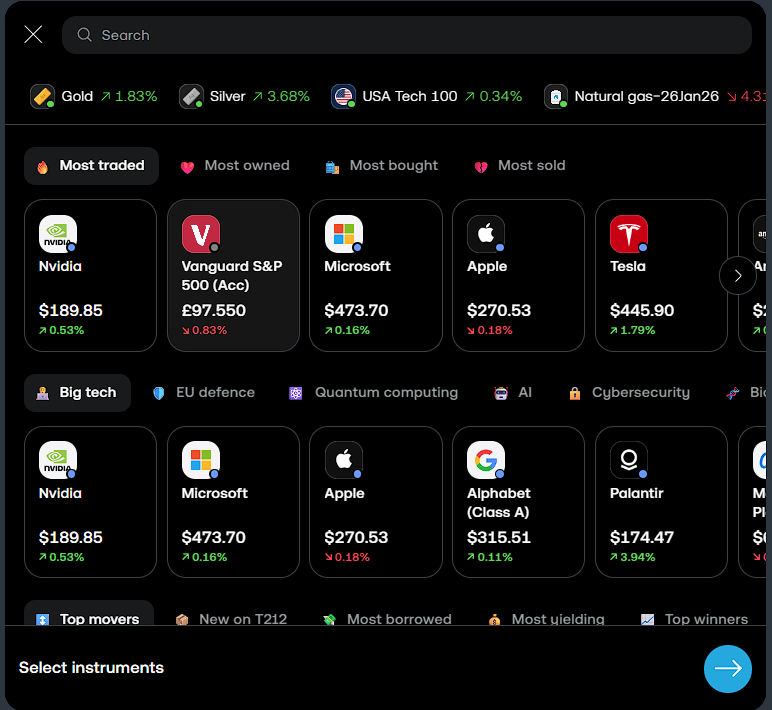
You can then search for each stock within Trading 212
Tap “Add to Pie” to include the stock in your pie, and you can continue choosing stocks that you want to include in your pie.
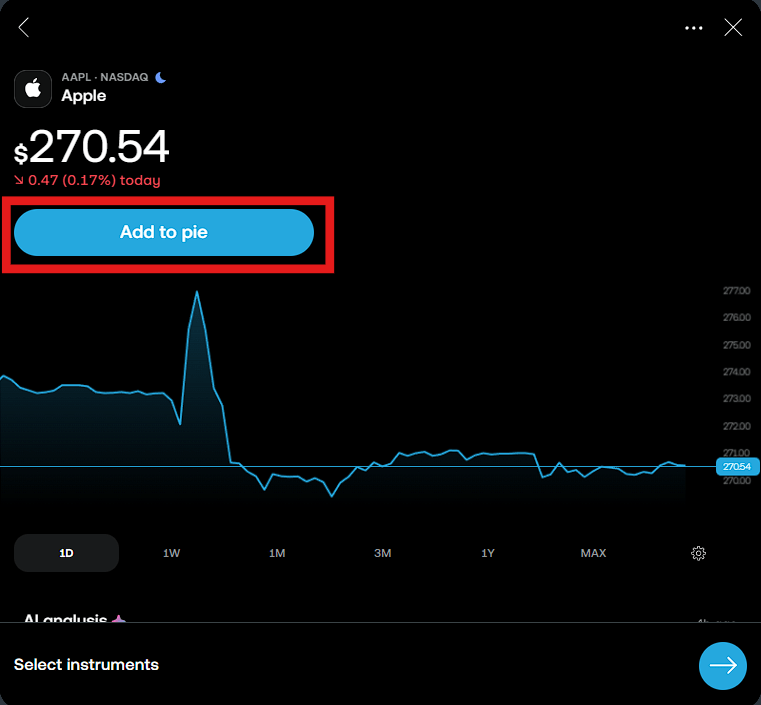
You can search for the stocks by name and decide how much of each investment to include in your Pie. The weighting is flexible; it can be based on the size of the company or how much of that company you want, but the total must add up to 100%.
Configuring the Investment Plan
The next step is either to auto-invest or to do it manually.
- Auto-invest lets you choose an investment schedule and automate your deposits.
- Manual investing gives you the option to choose funds in your account manually.
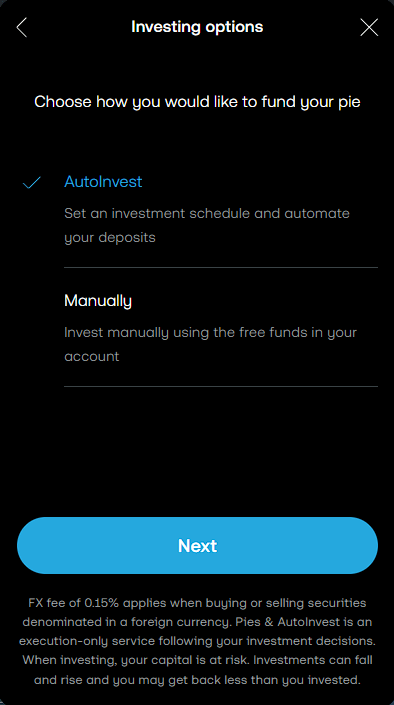
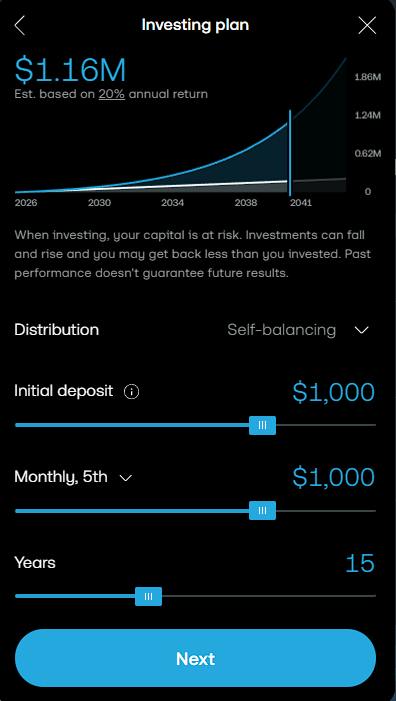
After selecting your preferred option, you’ll be directed to the investing plan of your choice.
For example, a 5-year plan with a monthly contribution of $1,000 and an initial deposit of $1,000 would result in a total capital of $60,000, projected to grow to $104,600 including returns.
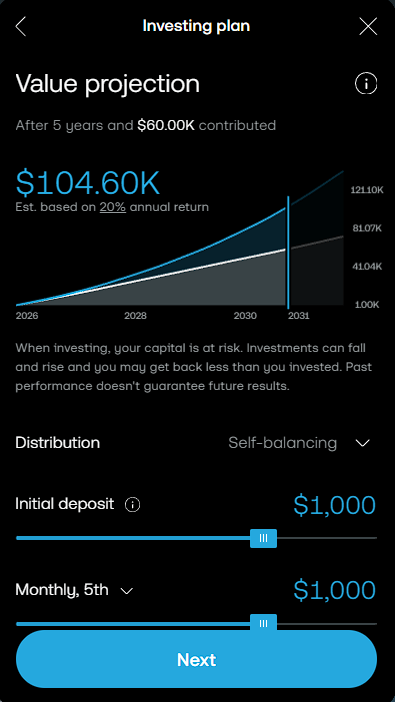
Extending the plan to 15 years with the same contributions, the $182,000 investment is projected to grow to $1,160,000 with these high-yielding dividend stock examples.
Naming the Pie and Finalising
Finally, you can name your personalised pie. For our example pie, we’ll name it “High-Yielding Dividends.”
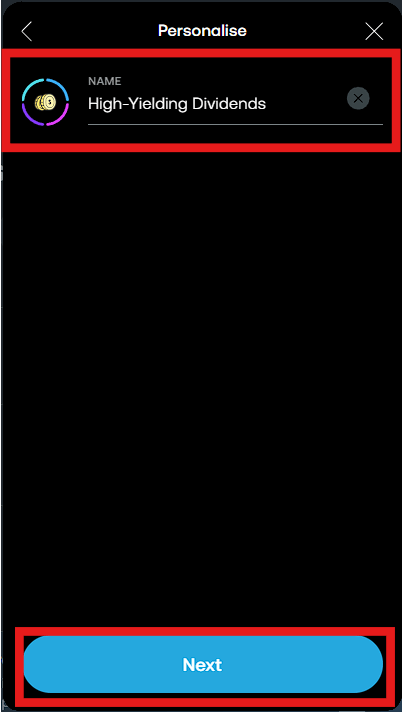
When you’re happy with your choices, click Create Pie, and you have successfully created your own pie with stocks of your choice.
Now what’s left is funding your pie and starting to invest.
Step #5: Keep an Eye on Things
Imagine if one slice of your pie grows much larger than the others, or if another slice shrinks too small. That wouldn’t make for a very balanced pie.
In investing, if one part of your portfolio becomes too dominant or too small, it can throw off the overall investment strategy. That’s where rebalancing comes in.
Rebalancing on Trading 212 is about keeping your investments in check.
Let’s say you start with a mix of stocks and bonds, but over time the stock portion grows bigger. Rebalancing kicks in to bring things back to your original plan.
You can do it yourself or let Trading 22’s tools handle it.
Either way, you sell some of the high-performing assets and buy more of the ones that aren’t doing so well.
This is ultimately buying low and selling high.
Final Thoughts
Creating a pie on Trading 212 provides a structured way to invest according to a clear plan.
If building a Pie by yourself feels difficult, you also have the option to copy an existing Pie, though there are some pitfalls and red flags to be aware of.
Finally, although pies are a great feature on Trading 212, you don’t need to invest via a pie if you don’t feel the need to decide an allocation and would rather build a portfolio as you go.
That’s a very reasonable way to do it, too.
FAQ
Do I need to fully invest my pie immediately?
No. You can create a pie without funding it straight away. Money is only invested when you add funds manually or through auto-invest.
Can I change allocations after creating a pie?
Yes. You can adjust weightings, add or remove assets, and rebalance at any time. Changes apply to future investments unless you manually rebalance existing holdings.
Is there a downside to using high-yield dividend stocks in a pie?
High yields can sometimes signal higher risk. Dividend-focused pies may experience more volatility or dividend cuts, so it’s important to understand why yields are high rather than assuming higher income is safer.
What happens if a stock in my pie is delisted or suspended?
If a stock becomes unavailable, Trading 212 will usually prevent further investment into it. You may need to manually adjust your pie to redistribute allocations.
Are pies suitable for beginners?
Pies can be beginner-friendly, but only when the underlying investments are understood. The tool simplifies execution, not risk, so learning what you’re investing in still matters.